A better way to browse
Should I read the articles in number order?
No. The article number identifies a published story; it does not tell you that one topic must be completed before another. Begin with the question that matters to you today. If an explanation depends on an earlier idea, the article should link to that foundation at the moment you need it.
Imagine your bank sends an alert about a payment you really made. You might begin with how a bank recognises an unusual payment. That question naturally leads into patterns, risk rules, databases and artificial intelligence. You did not begin by searching for “machine learning”; you began with a real event and discovered the technical idea through the explanation.
The same approach works across the site. A delayed flight can lead to aircraft rotation, air traffic control and weather elsewhere on the route. A school registration form can lead to document workflows, databases and secure online services. The familiar moment is the doorway; the article follows the connected system behind it.
How an explanation is built
What will I find inside a complete ExplainItSimply article?
A useful article must do more than provide a definition. It should answer the question, explain the reason, show the journey and leave the reader able to describe the idea in their own words. These four parts guide the writing.
1. The direct answer
The opening answers the title in clear language before introducing background or technical terms. If you asked why an aircraft stays up, you should not have to read half the page before learning that moving air, wing shape, lift, weight, thrust and drag work together.
The direct answer gives you a firm starting point. The rest of the article then explains why that answer is true.
2. The reason it happens
A difficult word is not an explanation by itself. Saying that a bank uses “fraud detection” does not yet explain how the bank noticed anything. The article must unpack patterns, normal account behaviour, risk signals and the checks used before a payment is approved or questioned.
This section separates the cause from the visible result so the reader can understand the mechanism rather than memorise a label.
3. The hidden journey
Everyday actions often travel through several connected steps. A message moves from a phone to an application, across a network, through servers and towards another device. A card payment moves through a shop, payment provider, bank and security checks before “Approved” appears.
Following that journey shows where information moves, where decisions are made and why a delay or failure can happen even when the screen looks simple.
4. A real example and the next question
Examples connect an unfamiliar idea to something the reader already knows. An article may compare software authentication to a security guard checking identity, or compare an aircraft route to a carefully managed road through three-dimensional space.
Internal links then point to the useful next step—not a random page. The goal is to let one answer grow into connected understanding.
Ideas do not stay in one menu
How can one everyday question connect several learning areas?
Real life does not separate itself into website categories. A single action can involve money, software, artificial intelligence, human decisions and legal or safety rules at the same time. The menus help you find a starting point, but the explanation should show the connections.
A card payment
This begins in Money & Life, but it also involves banking software, encrypted communication, databases, identity checks and risk models. Understanding the full journey helps a reader see why a declined payment does not always mean there is no money in the account.
A school application
This begins with education, but a modern online application also needs forms, document uploads, secure accounts, status tracking and people who review exceptions. The technology only works when it follows the real process carefully.
A flight delay
This begins with aviation, yet the explanation may involve weather, airport capacity, crew duty limits, maintenance, air traffic control and the earlier journey of the same aircraft. Clear explanations prevent one visible symptom from being mistaken for the whole cause.
A lunar eclipse
This begins in space, but understanding it requires motion, light, shadows, the Moon’s orbit and Earth’s position. A diagram or comparison is useful only when the words first make the alignment understandable.
All published learning areas
Which question would you like to explore first?
The shared article menu below groups the published stories without forcing you into a fixed learning order. Read the titles as questions you might ask in an ordinary conversation. Choose the closest match, then use the article’s internal links and right-hand menu to continue.
If you are completely new to a topic, start with an overview or foundation article. If you already understand the basics, choose the real-life situation that made you curious. Both routes should eventually meet at the same clear explanation.

Space & Universe1 September 2026
Spring brings new growth, summer brings longer warm days, autumn brings cooling weather and winter brings shorter cold days. Follow Earth around the Sun to see why these four seasons happen and why South Africa experiences them at different times from the Northern Hemisphere.
Read the full article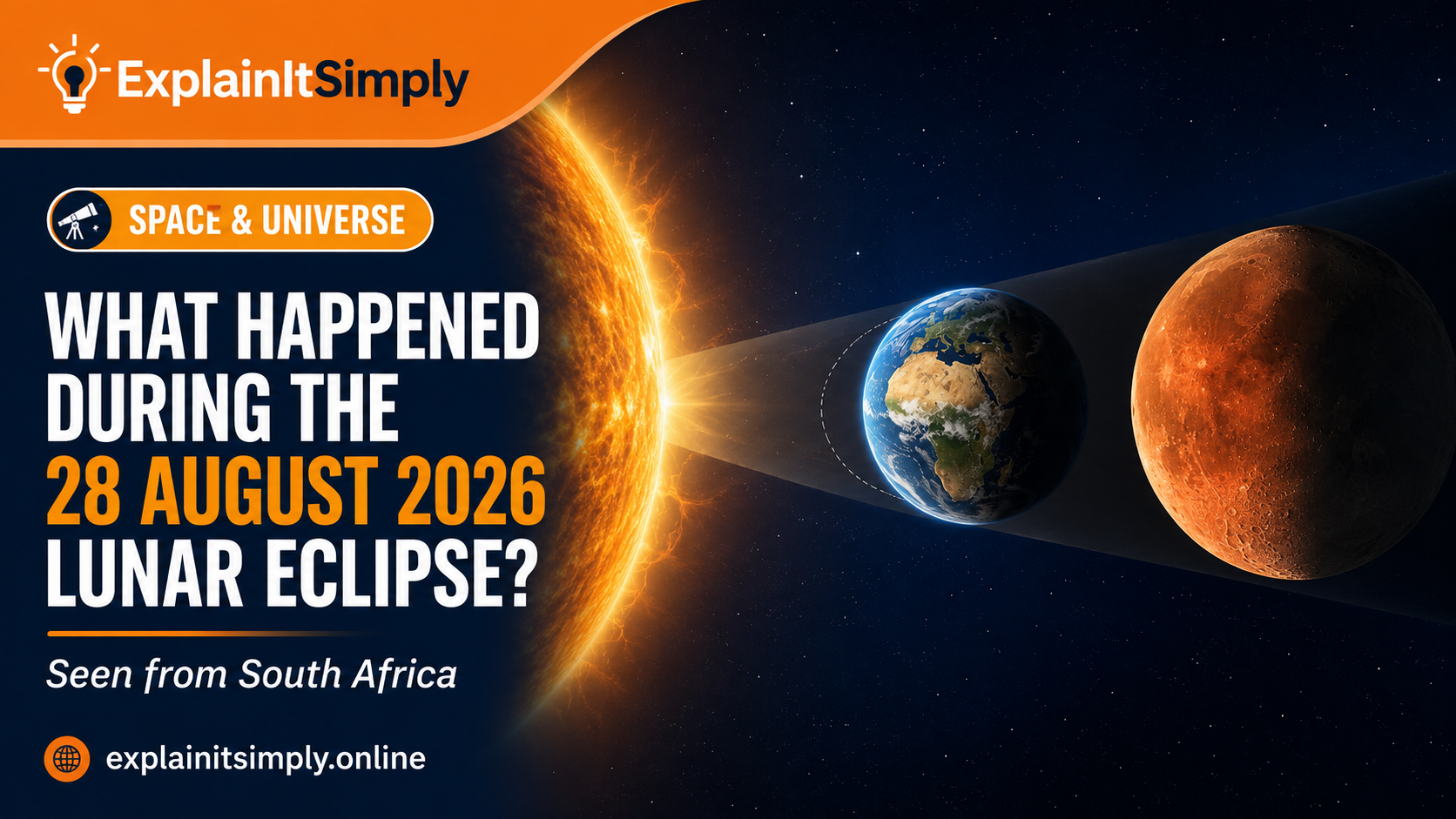
Space & Universe28 August 2026
South Africans watched part of the Moon move through Earth’s shadow before sunrise. See where the Sun, Earth and Moon were in space, why the Moon darkened, why it could look reddish and why a lunar eclipse does not happen every month.
Read the full article
Member Experience23 August 2026
A free account turns separate questions into a learning journey you can return to. Explore the dashboard, saved explanations, search history, study planning and the practical tools being developed to help members move from curiosity to useful progress.
Read the full article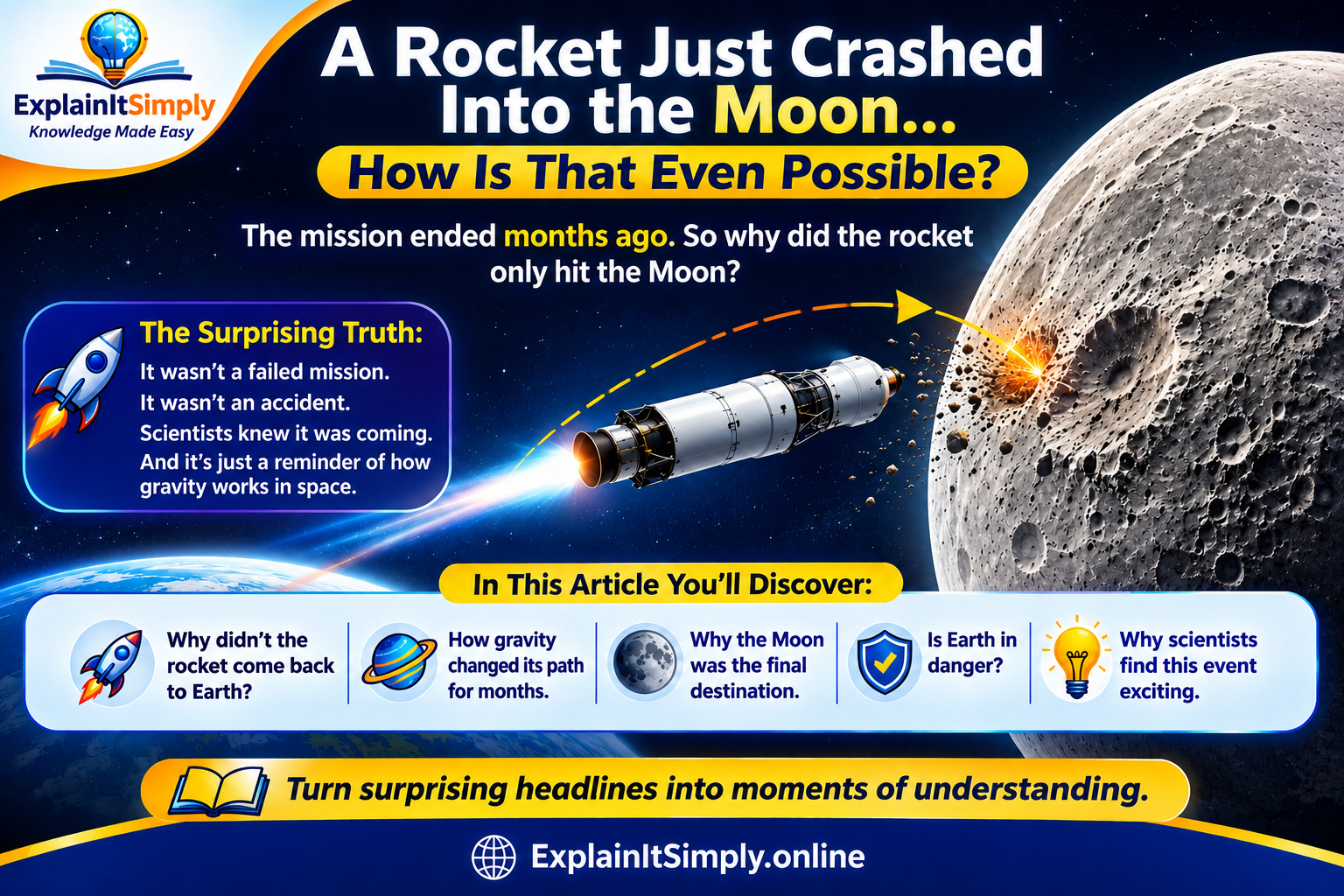
Space & Universe5 August 2026
A rocket stage can continue travelling long after its useful job is finished. Follow the completed lunar-impact story and learn how gravity, momentum, tracking and old space hardware can eventually lead to a collision with the Moon.
Read the full article
Artificial Intelligence2 August 2026
Artificial intelligence is becoming part of school, work, phones and everyday decisions. Learn how children and adults can use it responsibly, protect personal information, check uncertain answers and keep independent human judgement at the centre.
Read the full article
School & Learning1 August 2026
AI can rephrase a difficult lesson, create practice questions and help a learner find a starting point. But a quick answer is not always real understanding. See where AI can support education and why teachers, verification and independent thinking still matter.
Read the full article
Software & Aviation31 July 2026
Thousands of travellers can look at the same flight while only one person may receive a particular seat. Discover how booking software uses temporary holds, transactions and final confirmation to manage people competing for the same limited space.
Read the full article
Banking Software31 July 2026
The ATM does not store your account inside the machine. It securely identifies the card, checks the PIN, asks the bank’s systems for permission and records the result. Follow the full conversation that happens before cash is released.
Read the full article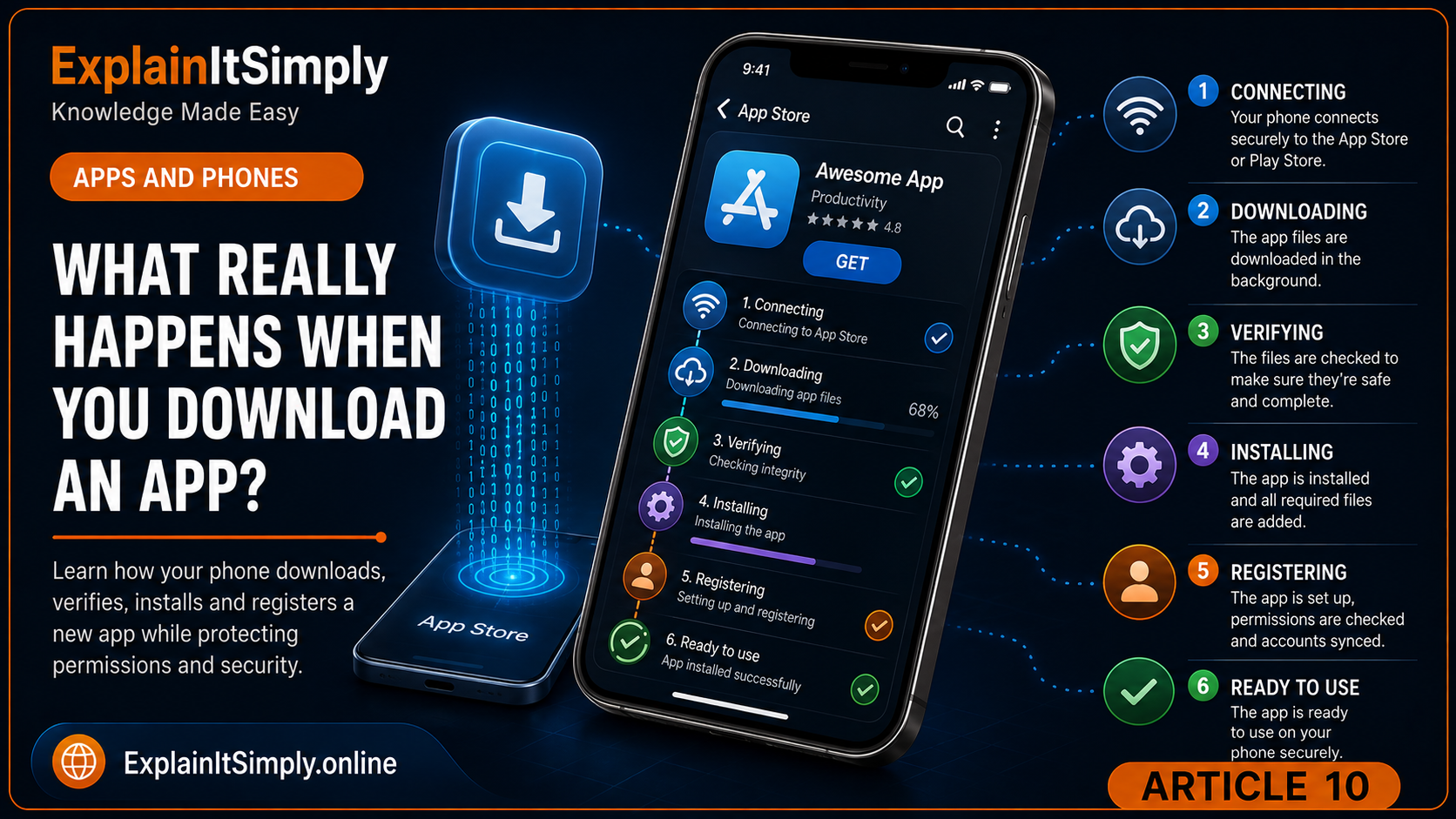
Mobile Software31 July 2026
A new icon appears after one tap, but your phone has downloaded a software package, checked where it came from, verified its contents, installed its files and asked about permissions. Follow each hidden step behind an ordinary app download.
Read the full article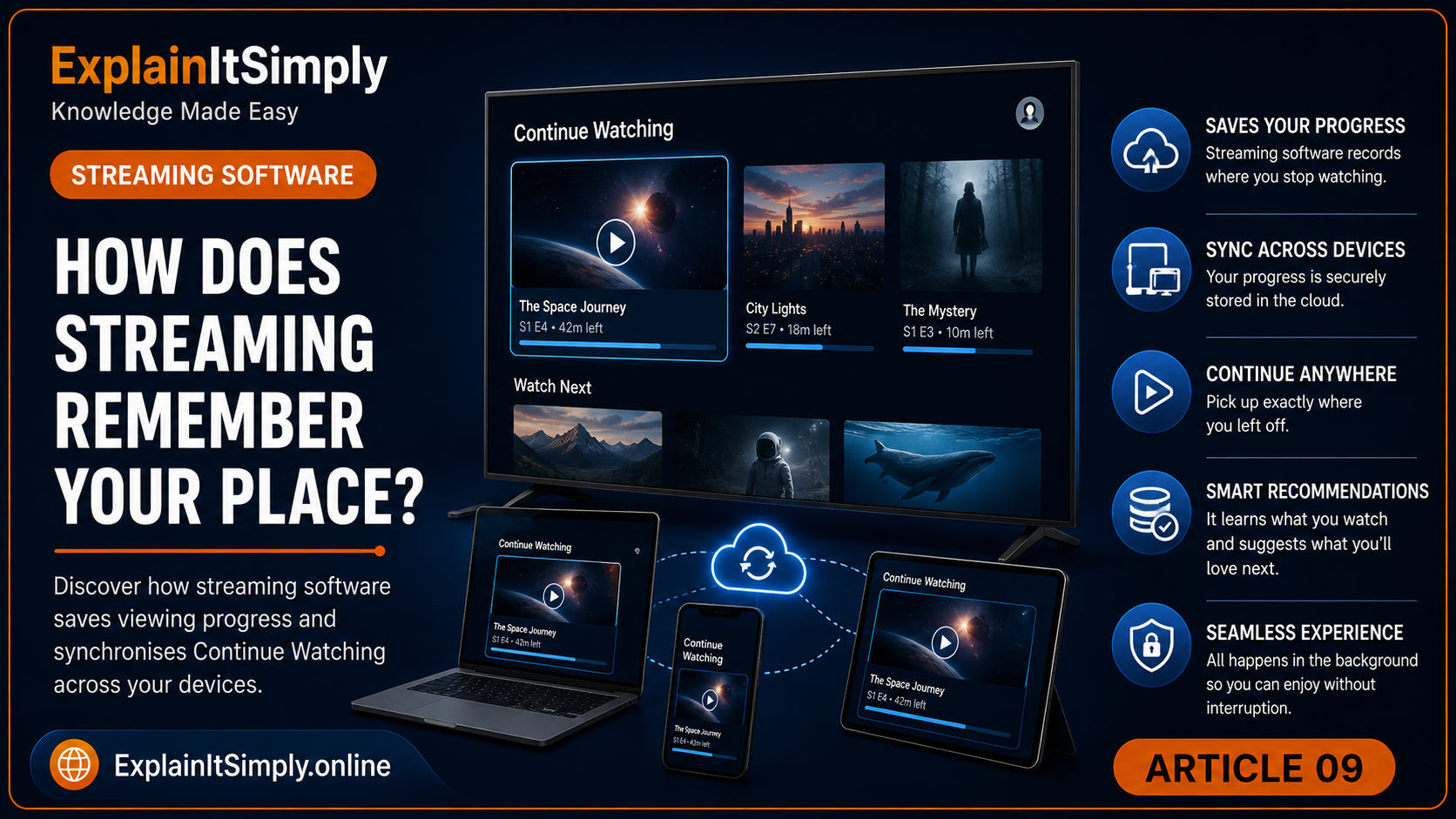
Streaming Software31 July 2026
You stop watching on one screen and continue later on another. Streaming software saves a small progress record, connects it to the correct profile and synchronises it across devices. Learn why the saved position can sometimes be slightly wrong.
Read the full article
Messaging Software31 July 2026
One tap begins a hidden journey through your phone, an internet connection, secured message systems and the recipient’s device. Follow the message step by step and learn what the clock and ticks can tell you when delivery is delayed.
Read the full article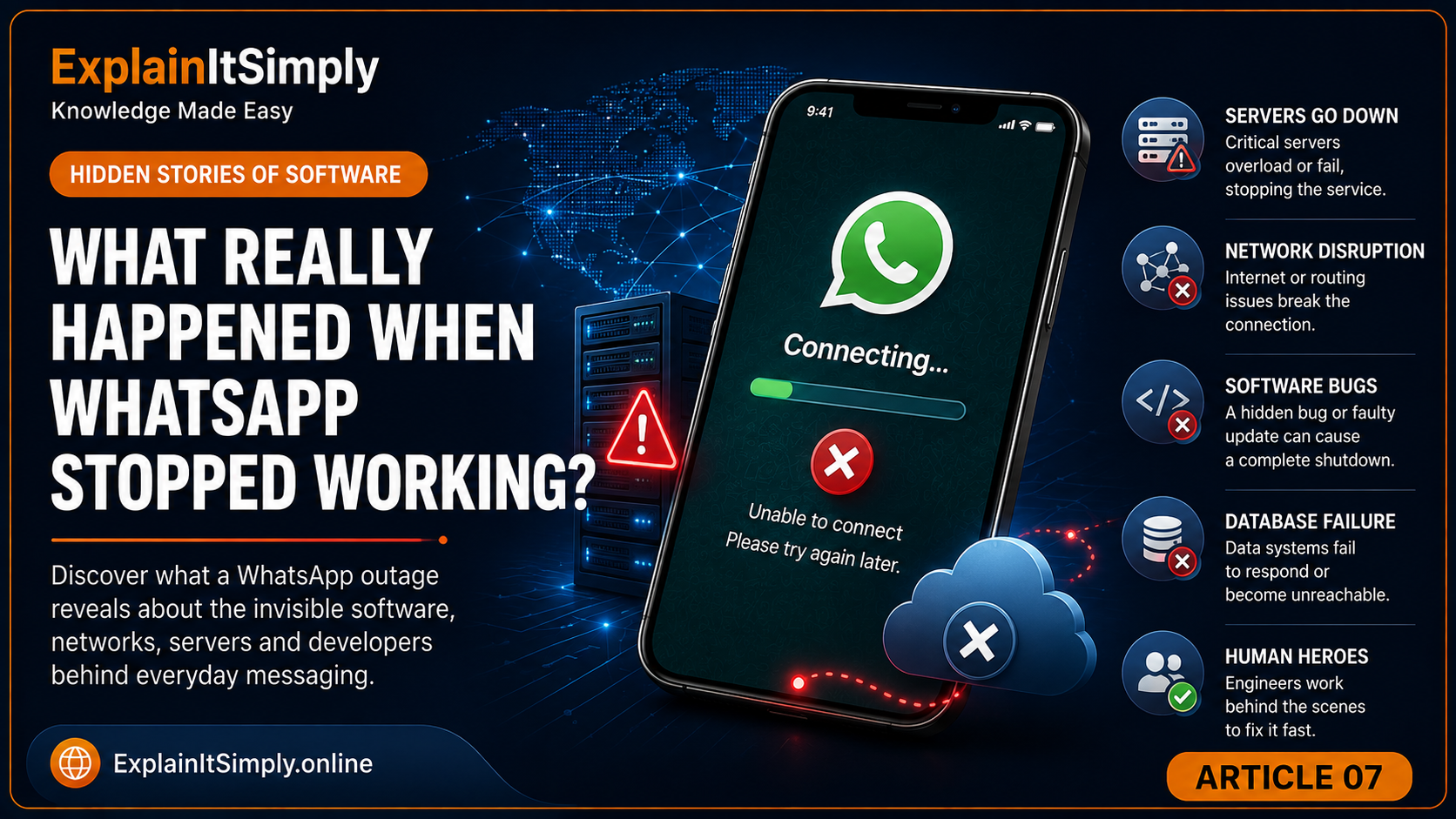
Software Systems31 July 2026
When a familiar app suddenly stops, the problem may be far beyond your phone. Explore the networks, servers, software releases, monitoring systems and people involved in an outage—and how engineers work out what failed before service returns.
Read the full article
AI & Photography30 July 2026
The photograph you see may be built from several frames captured around the moment you pressed the button. Learn how phone software combines light, detail, movement and faces to create one clearer picture—and when the processing can go too far.
Read the full article
AI & Security30 July 2026
A phone does not recognise a face in the same way a person does. It senses visible features, turns measurements into a protected numerical pattern and compares that pattern with the enrolled owner while checking for signs of a real face.
Read the full article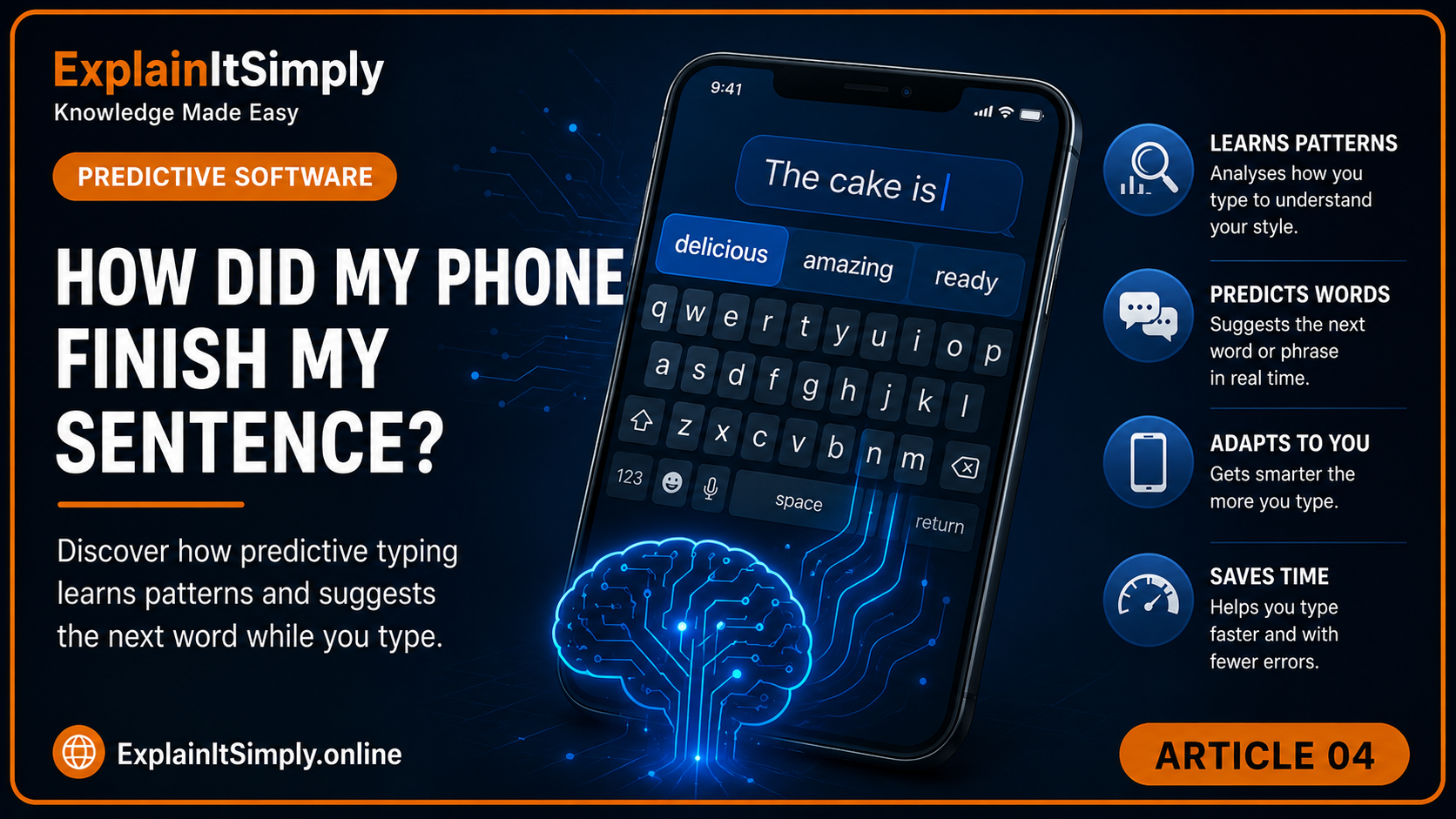
Predictive Typing30 July 2026
Your keyboard did not read your mind. It examined the letters already typed, common language patterns and the context of the sentence to rank likely next words. See why the suggestion can feel clever and why it can also be completely wrong.
Read the full article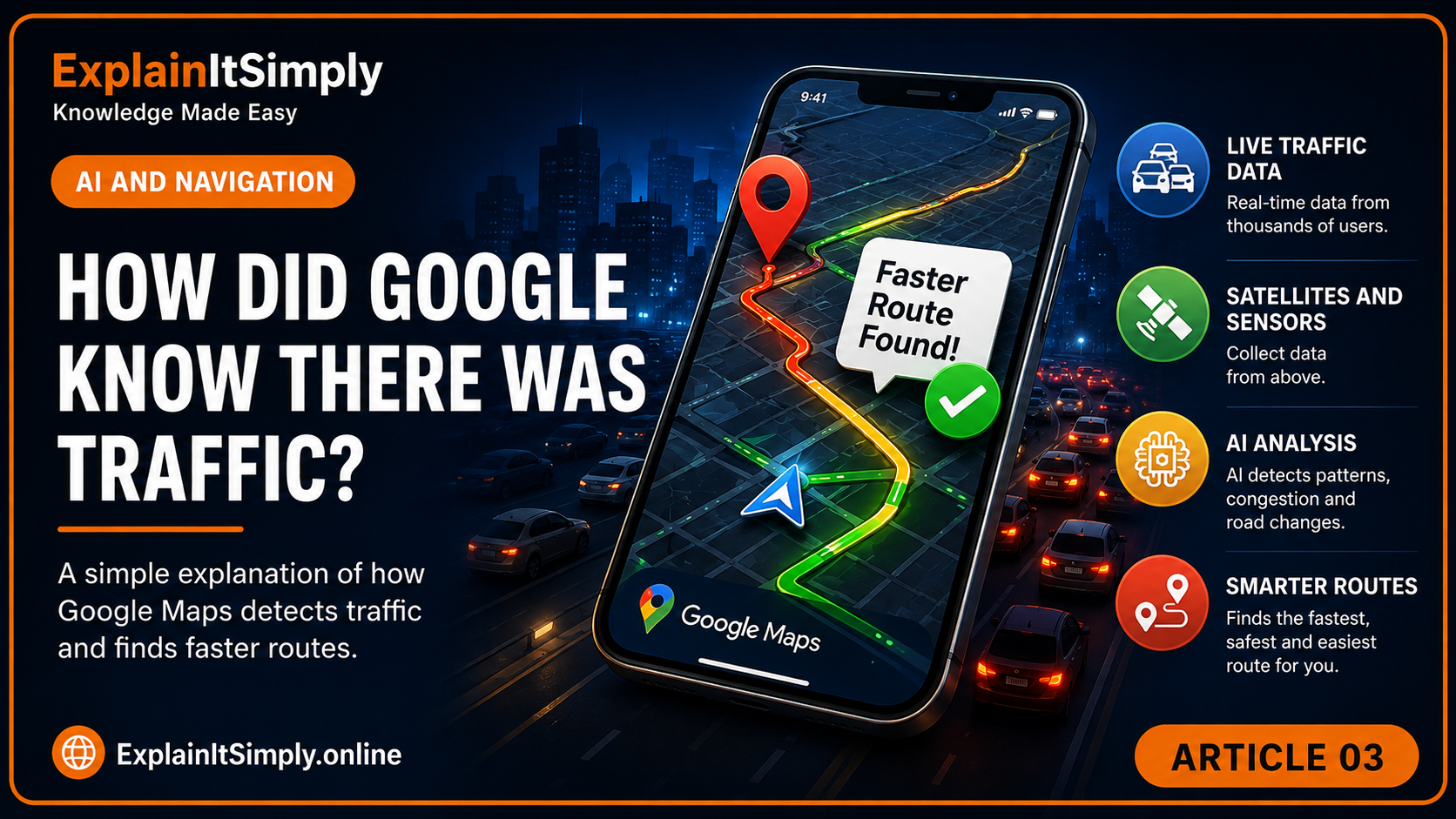
Maps & GPS30 July 2026
A map does not see the road like a driver. It combines changing location and movement signals, road information and earlier patterns to estimate where traffic is slowing. Follow the clues behind the red road and the changing arrival time.
Read the full article
Banking & AI30 July 2026
A bank cannot watch every customer personally, so its systems compare each payment with familiar behaviour and known warning signs. Learn how location, amount, timing, merchant and device clues can produce a risk score in seconds.
Read the full article
Artificial Intelligence30 July 2026
Artificial intelligence is not waiting somewhere in the future. It may already help sort messages, suggest words, protect a bank account, improve photographs and choose what appears on a screen. Follow one ordinary day to see where it works quietly.
Read the full article
What makes a page worth publishing?
How do I know an explanation has real value?
A long page can still be unhelpful if it repeats the same thought in different words. ExplainItSimply therefore aims for useful depth rather than length for its own sake. A strong article should answer the title clearly, explain the important mechanism, include a realistic example, acknowledge where the answer changes in different situations and connect the reader to trustworthy next steps.
The article should also be honest about limits. A simple explanation removes unnecessary difficulty; it should not remove an important condition just to make the answer sound certain. When a date, event, rule or technical detail can change, the page should make that context visible and be corrected when better information becomes available.
Read more about the research, writing and correction approach on the author page, or use the contact page to report a confusing statement or factual concern.
Still cannot find it?
What if my exact question is not in the library?
First, search using the words you already know. You do not need to translate the question into technical language. Describe the moment: “My phone completed my sentence,” “the Moon became darker,” or “my payment was stopped even though I had money.” That ordinary wording often reveals the best starting article.
If the question is genuinely missing, suggest the topic and explain what happened, what you expected and which part remains confusing. Those details are more useful than a one-word topic because they show the real question the future article must answer.
You can also browse the ExplainItSimply Blog for question-led stories, visit all learning sections for structured guides, or read the frequently asked questions to understand how topics and corrections are handled.