 Start here
On This Page You Will Learn
This guide is written for beginners. It starts with the simple idea, then builds toward real-life examples so the topic becomes easier to remember and easier to use.
- What the idea means in plain English, without technical pressure
- Where you already meet it in phones, search, banking, school and online tools
- How data, patterns, models, prompts and human guidance work together
- Where AI is useful and where people still need to check its answers
ExplainItSimply learning path
Which skills really matter in school, work and life?
This short guide prepares you for the main explanation. It shows the problem, the simple solution and the step-by-step path that makes the topic easier to understand.
?The problem
Many people hear about AI in the news, but they do not always understand what it is doing behind the scenes.
!The simple solution
Start with simple examples like ChatGPT, Google Maps, phone cameras, banking alerts and online recommendations.
*Why it matters
When you understand Skills Explained: What Really Matters, you can use AI tools more wisely and avoid believing myths or confusing headlines.
Real-life example: A learner trained by examples
Think of AI like a learner who has seen many examples. It notices patterns from those examples and uses them to make predictions or produce helpful answers.
How the idea builds up
- Start with one everyday AI example.
- Ask what the system is trying to predict or recognise.
- Look at the data or examples it learned from.
- Follow how it produces an answer or suggestion.
- Check the result with human judgement.
Remember this: A topic becomes easier when it is explained in order and connected to something familiar.
In Simple Terms
Did you know?
Communication, problem solving, reliability, and learning ability remain valuable even when technology changes.
ExplainItSimply makes complex topics easy to understand. Learn about artificial intelligence, education, careers, money, credit, budgeting, investing, and essential life skills through clear explanations, real-world examples, and practical guides designed for everyday people.
Not all skills are created equal. Understanding the difference can help you focus on what truly matters for career growth and long-term success.
 Go deeper
How to understand Skills Explained: What Really Matters clearly
Did you know?
Many strong careers are built by combining skills, not by relying on only one qualification.
Skills matter because qualifications alone do not show everything a person can do. Employers, customers and teams also value communication, reliability, problem-solving, practical ability and the willingness to keep learning.
A helpful way to learn this topic is to connect it to something familiar. Instead of memorising terms first, start by asking: what is moving, what is changing, what is causing it, and why does it matter in real life? That simple question turns a difficult subject into a story you can follow.
On ExplainItSimply, the goal is not to make you sound technical. The goal is to help you understand the idea well enough to explain it to someone else. When you can explain skills explained: what really matters using your own words and a normal example, the topic has started to make sense.
What you will learn on this page
- You will understand how skills explained: what really matters connects to real work and real decisions.
- You will learn how to think about skills, education, experience, confidence, and opportunity in a practical way.
- You will see why soft skills and technical skills both matter in a changing world.
- You will get examples that help you compare choices without feeling lost.
- You will finish with clearer next steps for personal growth or career planning.
The ExplainItSimply promise for this topic
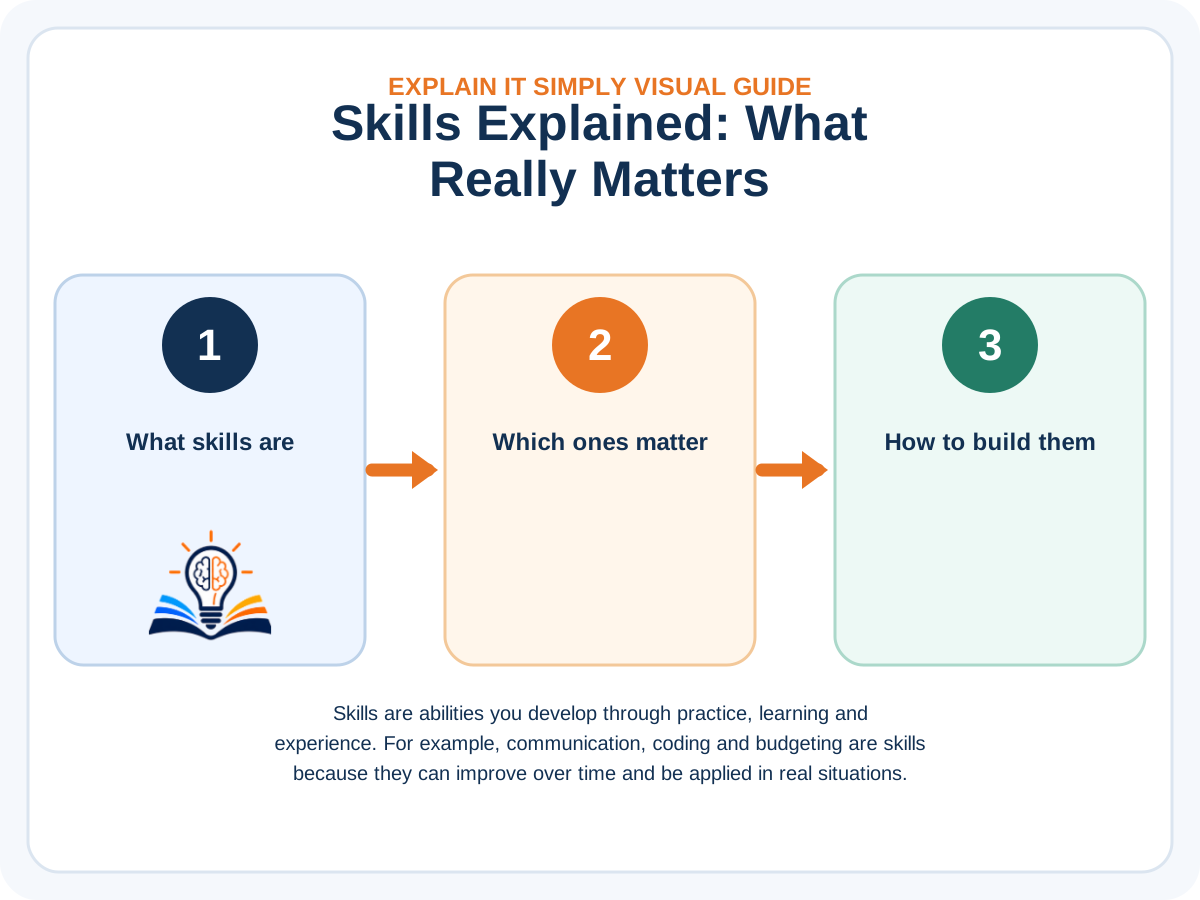
This page explains skills in plain language and connects each type to real work. The goal is to help you recognise what you already do well and build a realistic plan for improving the abilities that matter most.
Why this page matters
This page matters because people often underestimate useful abilities that were gained outside formal education. Understanding different types of skills helps you describe your strengths, identify gaps and choose what to practise next.
What you will learn about Skills Explained: What Really Matters
You will learn the difference between hard skills, soft skills and transferable skills. You will also see how skills are developed, how they can be demonstrated with evidence and why combining technical ability with strong human skills creates more opportunities.
Hard Skills
Did you know?
Many strong careers are built by combining skills, not by relying on only one qualification.
Hard skills are teachable and measurable abilities you can learn through courses, training, or practice. They are often specific to a job or field and can be listed on a resume or certification:
- Programming languages (Python, Java, C#)
- Data analysis and visualization (Excel, SQL, Power BI)
- Foreign languages (Spanish, Mandarin, French)
- Accounting and finance skills
- Machine operation, carpentry, or other trade skills
Hard skills can get you an interview or a starting position, but they are just the foundation. Without soft skills, growth and leadership can be limited.
Soft Skills
Did you know?
Communication, problem solving, reliability, and learning ability remain valuable even when technology changes.
Soft skills are behavioral and interpersonal abilities that determine how you interact with others and approach challenges. Unlike hard skills, they are not easily measured but are highly valued in any workplace:
- Communication – expressing ideas clearly, active listening
- Problem-solving – finding solutions to unexpected challenges
- Leadership – guiding teams, motivating others, decision-making
- Adaptability – embracing change and learning new skills quickly
- Teamwork – collaborating effectively across diverse groups
The Reality
Research shows that while hard skills can open doors, soft skills often determine career advancement. For example, a software engineer may be excellent technically, but communication and teamwork skills determine if they can lead projects or manage teams.
Transferable Skills
Did you know?
Communication, problem solving, reliability, and learning ability remain valuable even when technology changes.
Some skills are valuable in nearly every job and industry. These are transferable skills that allow you to adapt, move between roles, and take on new challenges:
- Critical thinking – analyzing information and making smart decisions
- Time management – prioritizing tasks and meeting deadlines
- Learning ability – picking up new tools, technologies, or methods quickly
- Emotional intelligence – understanding And managing your own and others' emotions
For instance, strong problem-solving skills can help a project manager, engineer, teacher, or entrepreneur. These skills make you versatile and future-proof in a rapidly changing job market.
How to Develop Skills
Did you know?
A career path is rarely a straight line. Many people discover better options after trying real work.
Developing skills requires a deliberate approach. Here are some practical tips:
-
Hard Skills: Take online courses, certifications, or workshops. Practice regularly and apply them to real-world projects.
-
Soft Skills: Join group projects, volunteer, participate in team sports, or take leadership roles. Reflect on feedback and practice communication.
-
Transferable Skills: Take on diverse experiences. Work on projects outside your comfort zone, and learn from mentors and role models.
Example in Action
A marketing professional might learn SEO (hard skill), improve negotiation and team management (soft skills), and develop problem-solving strategies (transferable skill). Together, these skills increase employability and long-term career success.
Why Both Matter
Did you know?
A career path is rarely a straight line. Many people discover better options after trying real work.
Focusing only on hard skills can make you highly technical but hard to lead or manage. Focusing only on soft skills can make you personable but lacking in expertise. The most successful professionals balance both, adapting as industries evolve.
How to Show That You Have a Skill
Saying that you have a skill is only the beginning. Strong evidence shows where you used it, what problem you faced, what action you took and what result followed.
For example, instead of saying “I am good at problem-solving,” you could explain how you found the cause of a customer issue, tested possible solutions and prevented the same problem from happening again. That example makes the skill believable.
A portfolio, completed project, reference, certificate or clear workplace example can all provide evidence. This is especially useful when a skill was gained through experience rather than formal study.
Deeper Explanation
Did you know?
A career path is rarely a straight line. Many people discover better options after trying real work.
How to understand this topic
The best way to understand this topic is to begin with the everyday problem it solves. Once the problem is clear, the details become easier to follow because each part has a purpose. This guide keeps that structure by explaining the idea first, then connecting it to practical examples.
Why simple explanations help
Simple explanations do not mean shallow explanations. They mean the topic is organised in a way that makes sense. When the language is clear and the examples are familiar, readers can understand the idea more deeply and remember it for longer.
Simple learning promise
For this skills guide, the promise is to focus on useful ability rather than impressive labels. Clear examples show how skills are learned, practised and demonstrated in real situations.
A Practical Example
Did you know?
Many strong careers are built by combining skills, not by relying on only one qualification.
Imagine you are explaining Skills Explained: What Really Matters to someone who has never heard the idea before. You would not begin with technical words. You would begin with a picture, a story, or a familiar comparison. That is how this page is written: it starts from the simplest useful idea and then builds slowly so the reader does not feel lost.
A useful explanation should answer the reader's first question, provide enough context to understand the full idea and then point naturally to the next topic. That creates a learning journey instead of a collection of disconnected facts.
Common Questions
Did you know?
Communication, problem solving, reliability, and learning ability remain valuable even when technology changes.
Is this guide written for beginners?
Yes. This guide is written for readers who want to understand Skills Explained: What Really Matters without needing expert knowledge first. It uses plain English and builds the explanation step by step.
Why does the page use longer paragraphs?
Longer paragraphs allow the idea to breathe. Instead of throwing disconnected bullet points at the reader, the page explains the thinking in full sentences so the topic feels more natural and complete.
What should I read next?
Use the related reading cards below or the menu at the top of the page. The best next page is usually one from the same category, because related topics strengthen each other.
Read More on ExplainItSimply
Did you know?
Communication, problem solving, reliability, and learning ability remain valuable even when technology changes.
Learning is easier when related topics connect. These guides continue the journey and help visitors spend more time exploring useful pages on the site.
Read another helpful guide
Did you know?
A career path is rarely a straight line. Many people discover better options after trying real work.
Learning works best when ideas connect. Explore another ExplainItSimply page and keep building your knowledge.
Explore Skills & Careers
Continue learning in simple English
Now that you have started understanding Skills explained: what really matters, keep going. The next page will help you connect this idea to another useful topic.
Overview
Is University for Everyone?
Read blogs
Where you will see this in real life
This topic is easier to remember when it connects to everyday life. Here are a few familiar situations where this idea becomes visible in everyday life.
Phone
Face unlock, autocorrect, camera improvements and voice assistants all use AI patterns.
Bank
Fraud detection looks for unusual card activity and warns you quickly.
Maps
Navigation apps predict traffic and suggest faster routes using large amounts of data.
Hospital
AI can support doctors by highlighting patterns in scans and patient information.
Frequently Asked Questions
Questions about Skills Explained
These questions answer the things beginners usually wonder about after reading this page. Open each question to see a simple, direct explanation.
Why are skills important?
Skills help people solve problems, communicate, adapt and create value at work and in daily life.
Do I need university for every career?
No. Some careers need university, while others grow through practical training, experience, portfolios and trade skills.
What skills matter in an AI world?
Critical thinking, communication, digital literacy, problem solving and adaptability are especially important.
How can I choose a career?
Start with your strengths, interests, values and the kind of problems you enjoy solving.
Go deeper
More real-life examples and practical understanding
Artificial Intelligence can feel mysterious because people often see the final answer but not the process behind it. A tool gives a reply, a phone recognises a face, a map suggests a faster road or a bank warns about unusual activity. Behind each of those actions is software looking for patterns in information. The important thing to remember is that AI does not understand life like a human being. It uses examples, probabilities and rules learned from data to make a useful prediction or suggestion.
Why this matters
When a topic connects to something familiar, it becomes easier to understand. ExplainItSimply uses everyday examples so readers do not have to memorise difficult words before they understand the idea.
Simple AI workflow
- Information is collected, such as text, images, numbers or examples.
- The system looks for patterns in that information.
- A model is trained to make predictions from similar patterns.
- A user asks a question, uploads an image or gives an instruction.
- The model predicts a useful answer and returns it to the user.
- A human checks the result when the decision is important.
Quick recap
You Have Learned This
You have learned the main idea behind Skills Explained, why it matters and how it appears in real life. You have also seen that difficult topics become easier when they are explained step by step with practical examples.
Remember this
The goal is not to memorise big words. The goal is to understand the idea well enough to explain it to someone else in simple language.