
By Ronnie Mbuqe
Subjects describe part of the knowledge involved; jobs combine tasks, people and working conditions. The daily mix can differ greatly between occupations in the same field.
Investigate one ordinary workday, including routine tasks and frustrations. A small project or conversation with a practitioner can test an assumption about the role.
RM
Ronnie Mbuqe
Author · ExplainItSimply
24 July 2026
8 minute read
English
The short version
A career choice is not a test with one hidden correct answer. It is a process of comparing your interests and strengths with entry requirements, study costs, employment realities and the daily work behind a job title. The goal is to narrow several realistic directions and gather evidence before committing time and money.
Career decisions
Choosing a career is a process of narrowing evidence, not guessing one perfect answer
A useful career decision combines several kinds of information: what you enjoy doing, what you are good at, subjects or qualifications required, the daily reality of the work, cost and length of study, and the opportunities available where you hope to live. No single quiz can make that decision for you, but good questions can reveal paths worth investigating.
How to Choose a Career Path in a real situation
A learner who enjoys Accounting, Mathematics and Economics might first think only of becoming an accountant. Those subjects can also connect to actuarial work, analytics, banking, economics, auditing, business systems and many other directions. The next step is not to pick the fanciest title. It is to compare the work, entry requirements and learning path of several realistic options.
The real-world point
Talking to people already doing the work is especially valuable because career names can hide very different day-to-day experiences. Job-shadowing, open days, course outlines and entry-level job adverts can turn a vague idea into evidence.
A point people often get wrong
Choosing a first qualification does not lock a person into one job for life. Careers often change as people gain experience and discover adjacent skills. A good first decision should open useful options instead of demand certainty about the next forty years.
Why is enjoying a school subject not enough to know whether a career suits you?
A subject can open interests, but work also includes collaboration, routine, deadlines and responsibility.
Trace the explanation
Investigate actual tasks and entry routes. A short practical sample can test an assumption more concretely than an attractive job title.
Source and further reading: CareerOneStop
Research the daily work, not only the career name
A career can sound attractive because of one visible part while the normal day is dominated by something else. A pilot does not only fly; there are procedures, planning, weather, recurrent training and responsibility. A software developer does not only write new code; there is debugging, reading old systems, meetings, testing and deployment. A lawyer may spend far more time reading and drafting than speaking in court.
Before investing years in a route, look for evidence of the ordinary work. Read course modules, inspect junior job adverts, speak to people at different career stages and, when possible, shadow or volunteer. The goal is not to remove uncertainty completely. It is to replace a vague image of the career with enough reality to make a better next decision.
Frequently Asked Questions
Questions about this article
What is the first step in choosing a career path?
Look past the job title to the actual daily tasks, environment and trade-offs, since the title alone rarely tells you what the work is really like.
How can I test a career before committing to it?
Shadow someone in the role, take on a small related project, or speak directly to people already doing the job.
Is it normal to change career direction later?
Yes. Careers develop through a sequence of learning and adjustment, not a single permanent decision made at the start.
Should salary be part of the decision?
Yes, but not by itself. Consider earning potential alongside study cost, job availability, working conditions, interests and the likelihood that you can sustain the path.
What if I like several different fields?
Look for overlap in the underlying skills and try short experiences in each area. You may discover hybrid careers that combine them.
What if my school subjects do not match my first choice?
Check the actual entry requirements early. Bridging routes, alternative programmes or a related qualification may still create a path.
How can Career Pathfinder help?
It can organise subjects and interests into possible directions to research. It should be used as a starting point for investigation instead of a final decision-maker.
A deeper look at How to Choose a Career Path
How to Choose a Career Path: connect the idea to the real world
A career choice is not only about a job title. It is about interests, strengths, opportunities, training, money needs and the type of problems a person is willing to solve every day. A good choice becomes clearer when you compare real tasks, not only the name of the career.
Why the idea matters: A career choice becomes easier to investigate when you compare the actual work, entry routes and skills instead of relying on the job title alone.
Practical points to remember
Key takeaways
- Start with what you enjoy doing and what problems you like solving.
- Research what the daily work actually looks like.
- Speak to people already doing the job.
- Compare study costs, time and opportunities.
- Remember that a career path can change as you grow.
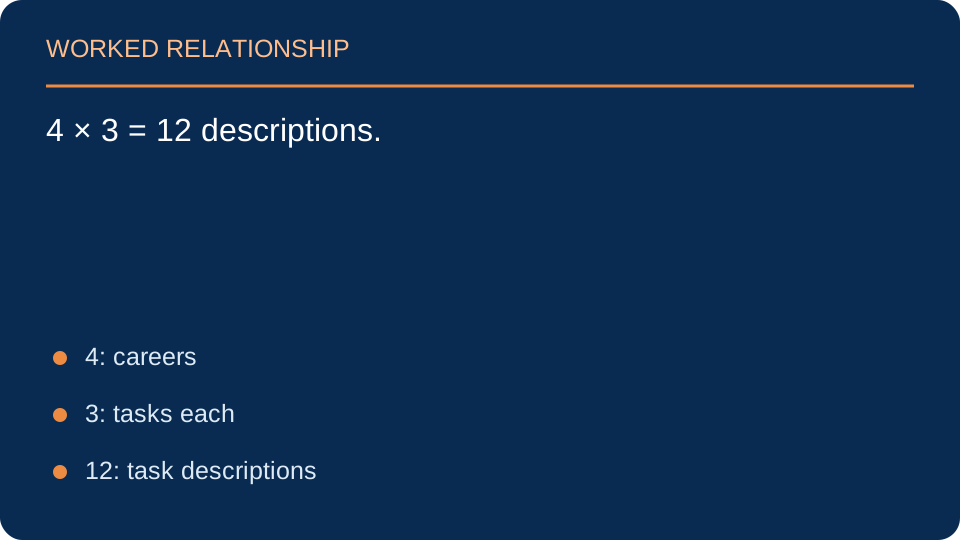
You research 4 careers and list 3 daily tasks for each. How many task descriptions have you collected?
Trace the explanation
4 × 3 = 12 descriptions. The goal is not collecting labels; compare which activities interest you and which conditions you would find difficult.
Source and further reading: CareerOneStop
What question is more useful than 'Which career suits me forever?'
Ask which next step would give you useful evidence. A career decision can improve through investigation rather than requiring perfect certainty at the start.
Compare two realistic routes by entry requirements, cost and actual tasks. Keep track of what remains unknown so that the next conversation has a purpose.
Turn A Career Name Into A Real Working Day
A career title can sound attractive while hiding the work behind it. “Software developer” may mean long periods of reading code, investigating bugs, discussing requirements and testing changes, not simply creating new apps. “Lawyer” can involve research, documents and negotiation as much as courtroom arguments. “Nurse” combines clinical knowledge with shift work, communication and emotional pressure.
Before committing to a path, investigate the ordinary Tuesday instead of the glamorous highlight. Ask someone in the field what they do during a normal week, what problems consume the most time, which qualifications are compulsory, what entry-level work looks like and what people often misunderstand about the job.
Then run a small experiment. Build a project, attend an open day, shadow someone, volunteer, take a short introductory course or practise one realistic task. The aim is not to prove you are already good at the career. It is to collect evidence about whether the work itself fits your interests, strengths and preferred lifestyle.
Liking a subject does not reveal every daily task in a career
A learner who enjoys science may like experiments but dislike a role dominated by documentation; another may enjoy the careful record keeping. Read actual course modules and job tasks before assuming a subject name describes the whole working day.
Choose one low-cost test: interview someone doing the work, try a small introductory project or compare two routes into the occupation. Record what surprised you. The purpose is to replace an imagined title with evidence about activities, constraints and required preparation.
Inspect the real daily tasks to Compare what you learned with your preferences
Should one disappointing introductory task settle the entire career decision?
Not necessarily. Investigate whether the task is representative, whether missing preparation caused the difficulty and whether another role in the field fits better.
Choose a career by testing fit, not guessing a title
Career decisions become easier when you compare the work itself rather than only the salary, status, or job title. Two jobs with similar names may involve very different daily tasks. A realistic choice considers your interests, current strengths, the skills you are willing to build, working conditions, training requirements, and local opportunities.
A four-part career test
- Interest: which activities hold your attention even when they are challenging? Interest is a clue, not a guarantee that every part of the job will be enjoyable.
- Evidence: what have you tried that suggests you may enjoy or perform the work? Use school subjects, projects, volunteering, job shadowing, or conversations with people in the field.
- Requirements: what subjects, qualifications, registration, physical demands, or entry-level experience are required? Confirm details with institutions and employers.
- Reality: what are the usual working hours, location, costs of training, starting responsibilities, and opportunities to progress?
Compare no more than three options at a time
Make a table with the same criteria for each career: tasks you would do, entry requirements, training cost, likely work environment, strengths you already have, and skills you need to develop. Give each criterion a simple rating and explain the evidence behind it. The numbers are not a scientific answer; they help you see why one option currently fits better.
Run a small experiment
Before committing to a long qualification, try a safe low-cost activity: complete a beginner coding exercise, interview a professional, attend an open day, volunteer, or study a sample lesson. Ask what the difficult and ordinary parts of the job are, not only the exciting parts. Then record what surprised you.
A career choice is a working decision, not a permanent identity. New information can change your plan. Keep a first choice, an alternative, and one action you can take this month to learn more.
For South African learners, verify subject and admission requirements directly with the relevant institution. Requirements differ by programme and may change between application cycles.
You like biology but dislike one imagined workplace. What could you investigate before rejecting the whole field?
One reasoned response
Explore different roles and settings that use biological knowledge. Check real duties and training routes rather than assuming one workplace represents every career in the subject.
Source and further reading: CareerOneStop
Try a career before making a big commitment
Career choice is easier when it is treated as a series of informed experiments rather than a once-off decision about your whole life. Interest matters, but so do the daily tasks, working conditions, training requirements, costs and opportunities available where you plan to live.
Run a small career experiment
- Choose one role you are curious about and find several current descriptions of its actual duties.
- List the subjects, qualifications, tools and people skills mentioned repeatedly.
- Try a beginner activity related to the work, such as a small coding task, a lesson plan, a design sketch or a basic budget.
- Speak to a student or practitioner and ask what a normal working day includes, not only what they enjoy.
- Compare what you expected with what you discovered, then choose the next question to investigate.
Separate interest from readiness
You do not need to be good at a field before you begin learning it. Instead, ask whether you are willing to practise its difficult parts and whether you can access the required training. Also check the practical route: entry requirements, fees, duration, funding, accreditation and realistic first jobs.
A career plan should remain adjustable. New experience may change your priorities, and skills can transfer between related fields. The goal is not to predict every future change; it is to make the next decision with better evidence than you had before.
Further reading
Page expanded: October 2026.
Sources
Sources and further reading
A closer lookAsk about an ordinary working day
A learner likes the image of a profession but has not seen its routine tasks. An informational conversation can reveal paperwork, teamwork, difficult decisions and working hours.
Work through the distinction
Ask for a recent example of a normal task and a challenging task. Compare those realities with your interests, then verify training requirements separately. One person's story adds context but is not a complete labour-market forecast.
Which question reveals useful detail?
Choose an answer to see feedback. You can try again.
Show the answer and explanation
What did you spend yesterday doing?. Ask for a recent example of a normal task and a challenging task. Compare those realities with your interests, then verify training requirements separately. One person's story adds context but is not a complete labour-market forecast.