
RM
Ronnie Mbuqe
Software developer · Creator of ExplainItSimply
Meet the Author
Curious by Nature. Developer by Profession. Lifelong Learner by Choice.
Hi, I’m Ronnie Mbuqe: a software developer who has never been very good at stopping after the first answer.
I have always wanted to know what happens behind the scenes. Not only what happened, but why it happened, what happened before it and which invisible systems quietly made it possible.
Whether the subject is Artificial Intelligence, software, space exploration, aviation, banking technology or tomorrow’s weather, I usually have one more question after everyone else is ready to move on.
That curiosity eventually became ExplainItSimply: a place where I can learn, investigate and turn complicated ideas into clear stories that other people can follow.
Ronnie moment: If you have ever searched “How does Wi-Fi work?” and somehow ended up reading about satellites three hours later, we may have the same research technique.

Experience
Since 2007
Professional experience helps me recognise patterns and solve problems, while curiosity keeps me checking what has changed. Technology, science and the questions people ask continue to evolve, so experience is most useful when it stays connected to learning.
How I Work
End to End
I follow a problem from the first business question through rules, data, APIs, interfaces, testing and the real person using the result. Looking end to end helps me find where two individually correct parts stop agreeing with each other.
My Purpose
Explain Clearly
A clear explanation should do more than replace a difficult word with an easy one. It must preserve the reason, show the mechanism, use a real example and leave the reader able to explain the idea in their own words.
What Software Taught Me
The Hardest Part Is Often Not the Code
People often think software development is mainly about writing code. Code matters, of course; the computer becomes surprisingly unhelpful without it, but code is only one part of a much larger journey.
The real work begins with understanding people, business rules, information, timing and the problem that needs to be solved. It continues through screens, databases, APIs, integrations, testing and support until the solution works properly for the people who depend on it.
Software taught me that many difficult technical problems are actually understanding problems. Once the real journey is clear, the code usually becomes much less mysterious.
A lesson from computers: They do exactly what we tell them. Unfortunately, we do not always tell them the right thing.
Should a reader accept a claim solely because its author sounds experienced?
An author can help make a subject approachable, but readers still need a way to inspect important claims.
Trace the explanation
Distinguish explanation, interpretation and sourced fact. A useful correction improves the page rather than threatening its purpose.
Source and further reading: UNESCO
What I Do as a Software Developer
I Build and Support the Full Journey, Not Only One Screen
A software developer does more than write the code visible in an editor. I begin by understanding the problem, the people affected by it and the rules the solution must follow. A screen may look simple, but it can depend on information moving correctly between a user interface, application logic, APIs, databases and external services.
My work moves across different parts of that journey. I design and improve web interfaces, build and connect APIs, work with database procedures and functions, investigate data, configure application environments and test how the complete process behaves. Some tasks create a new experience; others involve understanding an established system carefully enough to improve it without damaging the features people already depend on.
A large part of development is problem-solving. When a result is wrong, I trace the information backwards, check which conditions were applied and identify where two connected parts stopped agreeing. The final correction may be one line of code, but finding the right line requires understanding the entire journey around it.
Developers also translate between different kinds of understanding. A user describes what they need to achieve, a business rule explains what must be allowed, and the computer requires precise instructions. My role is to connect those views and turn them into a solution that is useful, reliable, secure and understandable enough to support in the future.
EIS Custom Solutions
Software built around how you work
See how I can help you build a booking system, simplify school admissions, manage service queues or create a website for your business.
Explore Custom Solutions →
How I Research
I Keep Asking Until the Parts Form One Understandable Picture
Research often begins with a question that sounds small: Why can we see the Moon during the day? Why does an aircraft remain in the sky? Why can a bank decline one transaction while its services are still available? I first separate what is being observed from the explanation people commonly repeat. That prevents a familiar sentence from being mistaken for a complete answer.
I then break the subject into layers. For a technical system, that may mean the user action, application, API, database, external service and final response. For a science topic, it may mean the objects involved, their movement, the forces or light involved and what an observer on Earth actually sees. I compare the layers until each step connects to the next without a hidden jump.
Time-sensitive facts require a different level of care. Event times, weather visibility, tax rules, product behaviour and official requirements can change. For those subjects, current authoritative information matters. Stable concepts can be explained from first principles, but a date or rule must belong to the correct place, version or year.
Finally, I test the explanation with ordinary questions. Could a Grade 3 learner understand the basic idea? Would an adult reader still learn something useful? Can a developer see where the simplified model ends? A page is ready only when the short answer and the deeper explanation support each other.
How Development Thinking Helps EIS
Debugging and Explaining Use the Same Discipline
When part of ExplainItSimply does not work as expected, I do not look only at the visible result. I follow the journey through the page structure, navigation, content source, member state and supporting code until I find the point where the intended experience changed. That habit helps keep links, tools and learning journeys reliable as the platform grows.
Writing a useful guide follows a similar process. I look for the assumption creating confusion, identify the missing connection and build an example that makes the idea visible. The goal is not to remove all detail. It is to keep the detail that explains the result and remove the words that merely make the subject sound impressive.
That is why many EIS pages use WHAT, WHY, HOW and WHEN. Those questions work like a careful investigation: identify the subject, understand the reason, follow the mechanism and place it in the correct situation. The reader receives a model they can use again, not only a sentence to memorise.
Accuracy and Responsibility
Simple Must Never Mean Careless
I use plain language because difficult wording can hide understanding. But simplifying a subject also creates responsibility: an explanation must not remove the condition that makes the answer true. “A lunar eclipse happens when Earth moves between the Sun and Moon” is useful, but the full explanation must also show why it does not happen at every full Moon and why weather changes visibility instead of the event itself.
I distinguish between a teaching example and a real instruction. A budgeting example can use round figures to demonstrate cash flow, while an actual tax, credit, medical or legal decision needs current official information and qualified advice. Pages should say where that boundary lies.
If a reader identifies a mistake or a clearer way to explain something, I want to know. Corrections are not a failure of learning; they are part of it. The contact page gives readers a direct way to question a claim, suggest a missing explanation or report a broken learning path.
What Keeps Me Curious
The Subjects That Usually Lead Me Down Another Rabbit Hole
I enjoy subjects where many systems connect and a simple everyday action hides a much bigger story.
🤖
Artificial Intelligence
AI fascinates me because it looks like one intelligent tool while relying on data, models, software, infrastructure and human decisions behind the scenes. I enjoy understanding what it can do, why it can still be wrong and how it fits into the applications people use every day.
Small warning: AI does not scare me. A confident answer with no evidence does.
💻
Software Development
Software quietly supports bookings, payments, messages, customer accounts, websites and many ordinary moments. Most people see the button they press. I enjoy following everything that happens after the click.
Fun fact: I still click buttons just to see what happens. Sometimes that is called testing. Sometimes it creates more testing.
🚀
Space Exploration
Gravity, rockets, satellites, orbits and docking show what becomes possible when science, engineering, software and human coordination work together. Space has a wonderful habit of answering one question and immediately creating five more.
A normal evening: I start by reading about the Moon and somehow finish with orbital mechanics and seventeen open tabs.
✈️
Aviation
A flight begins long before take-off. Weather, navigation, booking systems, aircraft computers, maintenance teams and air traffic control all contribute to a journey that the passenger may experience simply as “Seat 18A.” That hidden coordination fascinates me.
🌍
Everyday Technology
Bank payments, WhatsApp messages, maps, weather forecasts and online shopping all contain hidden journeys. One of my favourite questions is: “What really happens after I press this button?”
Browser status: The tabs are not clutter. They are a carefully unmanaged research system.
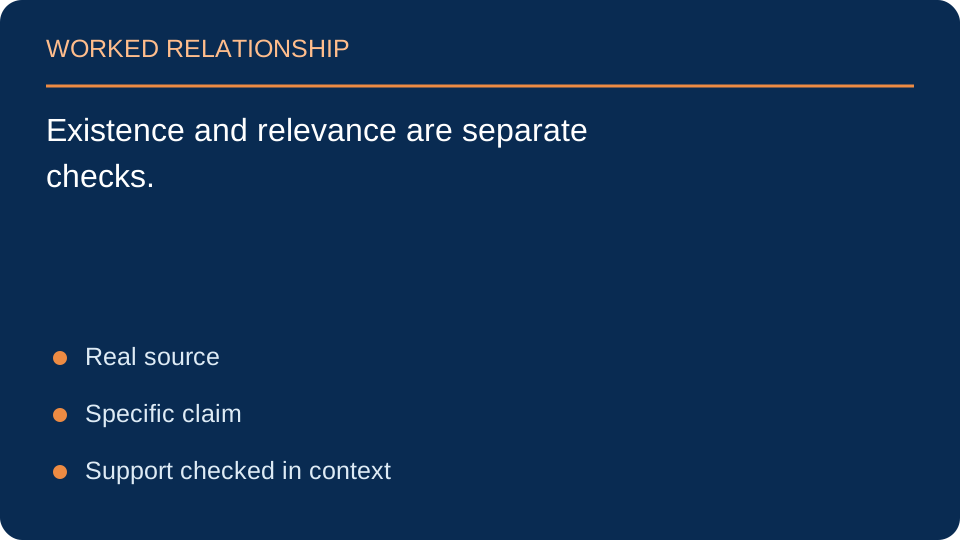
A real source is linked beneath a claim. What still needs checking?
Trace the explanation
Existence and relevance are separate checks. Read the original statement and its conditions. An accurate source can still be misquoted, overstretched or attached to an unrelated claim.
Source and further reading: UNESCO
What drives me
I Want Technology to Solve Problems People Are Still Living With
One of the things that keeps me interested in technology is seeing problems that are still being handled in ways that make life harder than they need to be. A school can still depend on manual forms and repeated administration. A learner can have information about subjects and grades but no easy way to see how those choices connect to possible study and career directions. A customer can press a button on a website without ever seeing the systems, databases and services working behind it.
Those situations make me ask a simple question: can technology make this clearer, faster, more useful or more accessible? That question is a big part of what drives my work on ExplainItSimply. I am interested not only in building software, but in finding the gap between what a system can do and what people are actually able to use.
Artificial intelligence makes that opportunity even bigger. AI can help people search, compare, practise, generate ideas and find patterns, but the technology only becomes valuable when it is connected to a real need and used responsibly. I want to explore that space by building practical tools, testing ideas and explaining the technology behind them in language that ordinary people can follow.
Why I Created ExplainItSimply
The Information Exists. The Understanding Is Often Scattered.
The internet has never contained more information, yet finding a clear learning path can still be difficult.
One page explains Artificial Intelligence.
Another explains software and APIs.
Another explains satellites, weather or navigation.
Very few places show how those ideas connect.
I created ExplainItSimply because I wanted a place where curiosity could continue naturally. We may begin with “What is AI?”, “Why did my payment fail?” or “Why does the Moon look different tonight?”, but we should not stop at a one-line definition. A useful explanation follows what happens next, identifies the systems involved, checks the idea with a real example and leaves the reader with a meaningful next step. The public library provides that complete answer freely; member tools help a reader save it, write a private note, practise it and return without losing the thread.
The goal is not to provide the fastest answer. It is to help people see the bigger picture, one understandable step at a time.
Experience & Continuous Learning
Experience Matters. Curiosity Keeps It Useful.
I have worked professionally in software development since 2007. That experience helps me recognise patterns, understand established systems and solve problems with a wider view of the journey around the code.
But technology does not stand still. Artificial Intelligence changes, software tools improve, security threats evolve, science makes new discoveries, and space and aviation continue to introduce new ideas. What worked yesterday still needs to be questioned when the world around it changes.
That is why I approach each day with the mindset of a learner: question assumptions, investigate carefully, test ideas and keep building on what I already know.
“
Experience matters, but curiosity keeps experience alive.
Things People Usually Ask Me
A Few Answers, Without Turning This Into a Job Interview
How many years have you been developing software?
I have worked professionally in software development since 2007, across mature business systems and newer web technology. Years of experience are valuable because they provide context and patterns, but they remain useful only when connected to curiosity, current knowledge and careful testing.
What is your favourite programming language?
Whichever language is appropriate for the system and problem in front of me. My work includes Oxygene and Delphi-style Pascal, C#, SQL, ASP.NET and Angular, and each exists inside a wider journey involving data, users and business rules. A favourite tool matters less than understanding why it is being used.
Why did you create ExplainItSimply?
I repeatedly found that the information people needed already existed, but it was scattered across technical documentation, specialist articles and disconnected definitions. I created ExplainItSimply to connect those pieces, begin with a familiar question and build a learning path that does not assume the reader already knows the correct technical words.
Do you know everything?
Absolutely not. I write as a working developer and active learner, not as a person claiming expertise in every subject on the website. My responsibility is to research carefully, separate stable explanations from facts that can change and show readers when current official or specialist guidance is necessary.
Coffee or tea?
Coffee, although I cannot honestly claim that it fixes software. It does, however, provide a useful pause while I read the error again and discover that the computer was following the instruction exactly as written.
What we are building
ExplainItSimply Has Become a Practical Learning Platform
The work has grown well beyond writing articles. Together with the platform development, the focus has expanded into a public learning experience and a dynamic Learning & Career Hub. That includes searchable explanations, connected learning sections, saved content, notes, quizzes, study support and Career Pathfinder.
The main subject areas reflect the questions that keep appearing in real life: AI and how it works, software and the systems behind applications, space and the universe: school and learning: money and life: skills and careers: and aviation. They may look like different subjects, but they share one idea: understand what is happening underneath the surface so you can make better sense of the world around you.
Career Pathfinder is an important part of that evolution. It takes the same approach into a learner's future by starting with current subjects or modules, interests and strengths, then showing possible directions that can be researched and compared. As a learner's subjects, grades and interests change, the information can change too.
You find an apparent error in an article. What would make your feedback actionable?
One reasoned response
Quote the specific claim, explain the issue and provide an original source if available. State uncertainty where appropriate so the author can investigate the actual disagreement.
Source and further reading: UNESCO
One Last Thing
I Do Not Write Because I Know Everything
I write because I enjoy learning, asking questions and sharing what I discover. Every article teaches me something new, and every good question opens another door.
If something on ExplainItSimply helps you understand the world a little better today than you did yesterday, then the platform is doing exactly what I hoped it would do.
“I don’t collect answers. I collect better questions.”
Let’s keep learning, together.Ronnie Mbuqe
Questions people ask
About the author and the site
Who is behind ExplainItSimply?
Ronnie Mbuqe, a software developer, curious problem-solver and lifelong learner based in South Africa. I build systems for a living and write explanations so other people can understand the hidden journeys behind everyday technology and ideas.
Is ExplainItSimply only a blog?
No. It is a learning platform. You will find structured guides across several topics, plus an optional member area for notes, learning paths and quizzes. The writing still feels like a clear conversation; the platform around it helps that conversation continue.
Why should I trust these explanations?
Because they are written to be checkable, practical and honest about limits. Where a topic needs professional advice, we say so. Where something is uncertain, we try to say what is known and what is still debated. Clarity includes admitting what a page is not.
How can I follow the work or get in touch?
Use the Contact page for topic suggestions, corrections and feedback. You can also explore the public guides and, if you want a more organised journey, the member learning tools.