 Start here
On This Page You Will Learn
This guide is written for beginners. It starts with the simple idea, then builds toward real-life examples so the topic becomes easier to remember and easier to use.
- How this money topic affects everyday choices at home, work and school
- The basic words people use in banking, credit, tax, saving and investing
- Simple examples that show what good and risky decisions look like
- How to ask better questions before signing, borrowing or spending
ExplainItSimply learning path
Why does credit matter in everyday money decisions?
This short guide prepares you for the main explanation. It shows the problem, the simple solution and the step-by-step path that makes the topic easier to understand.
?The problem
People often meet interesting ideas in daily life but do not always get a simple explanation that connects the idea to real examples.
!The simple solution
Start with one clear question, answer it in simple English and connect it to something the reader already knows.
*Why it matters
When you understand Credit Explained With Everyday Examples, you gain one useful idea you can remember, use or share.
Real-life example: A short conversation
Think of this blog post as a short conversation. It takes one question, explains it clearly, and gives you something useful to remember or share.
How the idea builds up
- Start with one interesting question.
- Explain the simple answer.
- Use a familiar example.
- Connect it to a deeper guide if needed.
- Leave the reader with one useful takeaway.
Remember this: A topic becomes easier when it is explained in order and connected to something familiar.
Credit Explained With Everyday Examples
Did you know?
Simple explanations are powerful because they help people use knowledge, not just read it.
What credit really means, why lenders care, and how responsible borrowing can help your future.
Credit Explained With Everyday Examples matters because daily life becomes easier when money, choices, planning, and risk make sense. This page explains the topic with simple examples so you can use the knowledge in real situations.
Think of this as a conversation with a patient teacher. We start with the simple meaning, then we build the idea step by step. You do not need expert knowledge before you begin. You only need curiosity and a few minutes of focused reading.

A simple example
Did you know?
Simple explanations are powerful because they help people use knowledge, not just read it.
When people learn through examples, the topic becomes less abstract. For this blog, imagine explaining the idea to a friend who has heard the words before but never had the chance to ask basic questions. The goal is to remove embarrassment and replace it with confidence.
That is the heart of ExplainItSimply: no shame, no jargon, and no pretending. We explain useful things clearly because understanding Should feel possible.
What to remember
Did you know?
Simple explanations are powerful because they help people use knowledge, not just read it.
The most important lesson is that complex topics are usually made from smaller parts. Once you understand the smaller parts, the bigger topic becomes much easier to follow.
Continue learning in simple English
Now that you have started understanding Credit explained with everyday examples, keep going. The next page will help you connect this idea to another useful topic.
Read the Blog
Back to Home
Read blogs
Where you will see this in real life
This topic is easier to remember when it connects to everyday life. Here are a few familiar situations where this idea becomes visible in everyday life.
Daily Questions
Blog posts answer the questions people often ask in normal life.
Short Lessons
Each post gives one idea enough space to make sense.
Related Guides
Blogs connect back to deeper learning pages.
Fresh Content
New posts can keep visitors returning as the website grows.
Frequently Asked Questions
Questions about Blog Credit Simple
These questions answer the things beginners usually wonder about after reading this page. Open each question to see a simple, direct explanation.
What is the ExplainItSimply blog for?
The blog gives short, practical explanations and examples that connect to the main learning guides.
Are blog posts beginner-friendly?
Yes. Blog posts are written in simple English and focus on everyday examples.
How are blog posts connected to articles?
Each blog points readers toward related guides so they can continue learning.
Can I read blogs in any order?
Yes. You can read them in any order, but the related links help you follow a logical learning path.
Go deeper
More real-life examples and practical understanding
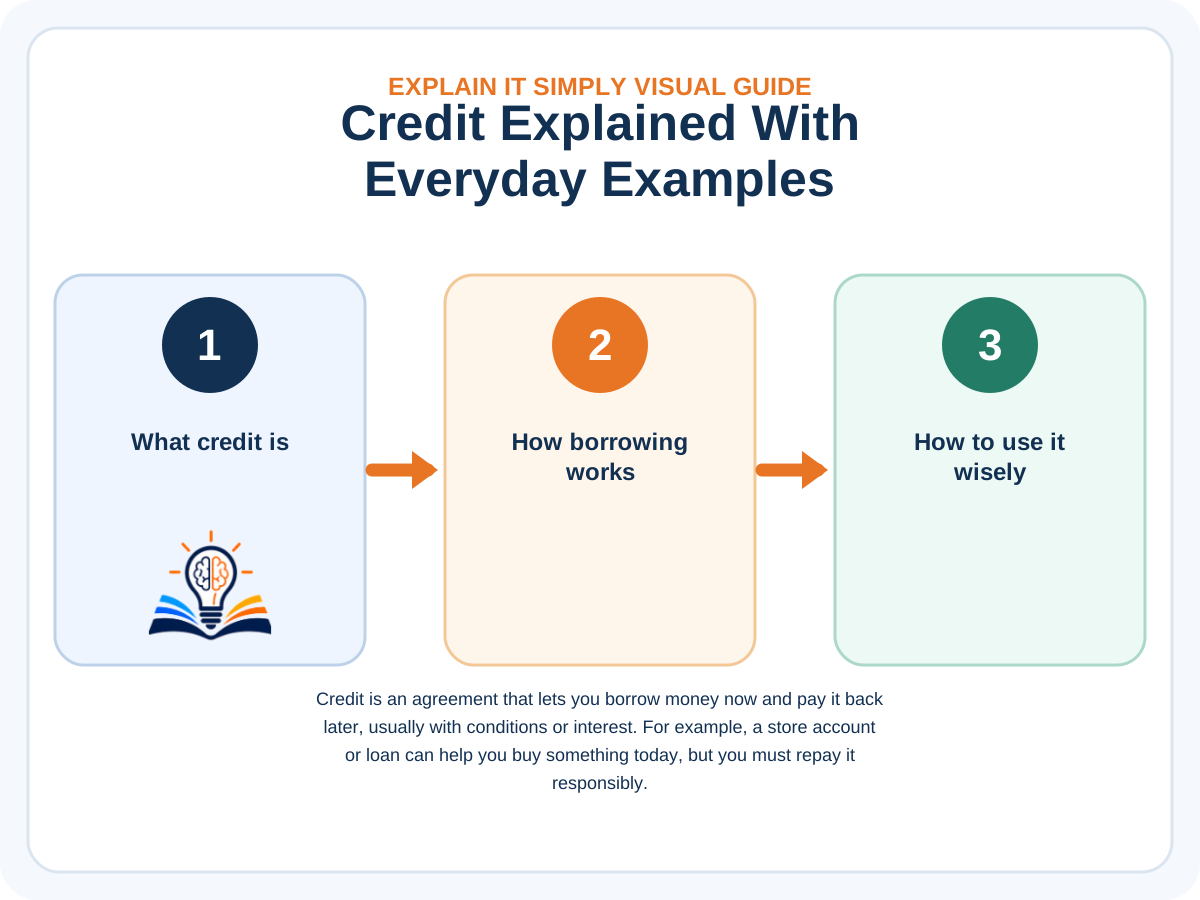
Credit can help people buy something now and pay later, but it also creates responsibility. The important questions are: how much will I repay, what interest will I pay, what happens if I miss a payment and will this affect my future borrowing? Understanding credit before using it can prevent stress later.
Why this matters
When a topic connects to something familiar, it becomes easier to understand. ExplainItSimply uses everyday examples so readers do not have to memorise difficult words before they understand the idea.
Simple learning path
- Start with the basic meaning.
- Connect it to one real-life example.
- Break the process into small steps.
- Notice common mistakes or misunderstandings.
- Use the idea in a practical situation.
Quick recap
You Have Learned This
You have learned the main idea behind Credit Explained With Everyday Examples, why it matters and how it appears in real life. You have also seen that difficult topics become easier when they are explained step by step with practical examples.
Remember this
The goal is not to memorise big words. The goal is to understand the idea well enough to explain it to someone else in simple language.
Extended reading
Credit Explained With Everyday Examples
This blog is part of the ExplainItSimply learning journey. The goal is to take one useful idea and make it practical enough that a reader can recognise it in everyday life. A good explanation should not only define a topic; it should show where the topic appears, why it matters, and how a person can use the idea with more confidence.
Think of this page as a bridge between a short answer and a full guide. It gives enough detail to help the idea make sense, while still keeping the language clear and direct. When readers understand the simple version first, the deeper version becomes much easier to follow.
Practical points to remember
- Credit is money or value you use now and repay later.
- Interest is the extra cost of borrowing.
- Late payments can make credit more expensive.
- Good credit habits can help with future applications.
- Credit should be planned, not used as emergency income every month.
The most important lesson is that learning becomes easier when examples are familiar. That is why ExplainItSimply connects topics to phones, banks, schools, shops, airports, kitchens, transport and ordinary daily decisions.