 Start here
On This Page You Will Learn
This guide is written for beginners. It starts with the simple idea, then builds toward real-life examples so the topic becomes easier to remember and easier to use.
- Why this skill matters in school, work and everyday decisions
- How people use it in conversations, careers, business and family life
- Small steps anyone can practise to improve over time
- How this skill connects to future opportunities
ExplainItSimply learning path
Is university the only path to a good future?
Instead of asking whether university is good or bad, ask which path gives you the skills, qualification and experience required for the future you want.
?Why the decision feels so difficult
Many people know qualifications matter, but they are not always taught the practical skills that help them make better choices and work well with others.
!Start with the career, not the campus
Explain each skill with real situations from school, work, family, technology and everyday decisions.
*Why the right path matters
When you understand Is University for Everyone?, you can build confidence for future opportunities and real-life challenges.
Real-life example: A toolbox for life
Think of skills like tools in a toolbox. You may not use every tool every day, but when a problem appears, the right tool helps you handle it better.
How the idea builds up
- Start with the situation you need to handle.
- Identify the skill that helps.
- Use a simple example from real life.
- Practise the skill in small moments.
- Use what you learn to make better decisions.
Remember this: A topic becomes easier when it is explained in order and connected to something familiar.
In Simple Terms
Career fact
Communication, problem solving, reliability, and learning ability remain valuable even when technology changes.
The right education path depends on the career you want, the qualification it requires, your learning style, your finances and the opportunities available to you. Success is not measured by choosing the same route as everyone else.
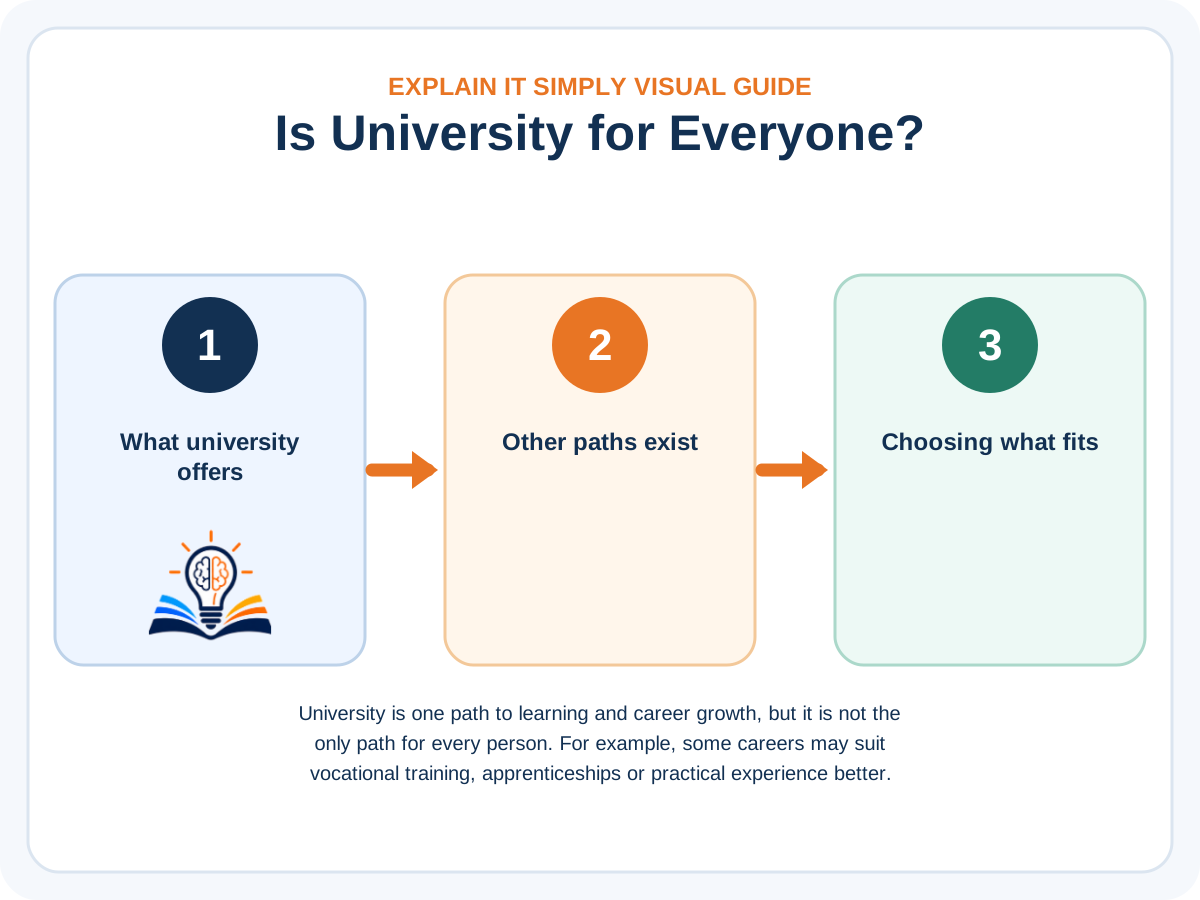
University can be a valuable path, but it isn’t the only way to build a successful career. The right choice depends on your goals, interests, and resources.
 Go deeper
How to understand Is University for Everyone? clearly
Think about this
A career path is rarely a straight line. Many people discover better options after trying real work.
Is University for Everyone? matters because careers are changing and people need clear guidance, not fear. This page explains the topic in a practical way so you can make better choices about skills, work, education, and your future.
A helpful way to learn this topic is to connect it to something familiar. Instead of memorising terms first, start by asking: what is moving, what is changing, what is causing it, and why does it matter in real life? That simple question turns a difficult subject into a story you can follow.
On ExplainItSimply, the goal is not to make you sound technical. The goal is to help you understand the idea well enough to explain it to someone else. When you can explain is university for everyone? using your own words and a normal example, the topic has started to make sense.
What you will learn on this page
- You will understand how is university for everyone? connects to real work and real decisions.
- You will learn how to think about skills, education, experience, confidence, and opportunity in a practical way.
- You will see why soft skills and technical skills both matter in a changing world.
- You will get examples that help you compare choices without feeling lost.
- You will finish with clearer next steps for personal growth or career planning.
The ExplainItSimply promise for this topic
No jargon for the sake of sounding clever. No confusing shortcuts. This page explains is university for everyone? with plain language, real examples, and clear connections so you can use the idea, remember it, and continue learning with confidence.
Why this page matters
This page matters because artificial intelligence is now part of ordinary life, not only something used by large technology companies. When you understand Is University for Everyone?, you can use AI tools more carefully, ask better questions, and avoid believing that every AI answer is automatically correct. Simple knowledge gives you confidence and helps you stay in control.
What you will learn about Is University for Everyone?
You will learn what Is University for Everyone? means in everyday language, how it fits into the wider AI conversation, and why it matters for school, work, business and daily decisions. The page explains the idea slowly so you can understand both the benefit and the limitation. By the end, you should be able to talk about the topic without relying on buzzwords.
When University Makes Sense
Qualification check
A qualification is most useful when it matches the entry requirements of the career you actually want.
University is ideal for some people and careers. Consider these situations:
- Careers that require degrees: medicine, law, engineering, or research roles.
- You have a strong academic passion and enjoy structured learning.
- The career path you want values formal credentials for credibility or advancement.
- You’re prepared for the financial and time commitment involved in a degree program.
When University Might Not Be Necessary
Alternative route
Apprenticeships and learnerships can combine structured training with real workplace experience.
Not all careers require a degree, and success can be built in other ways. University may not be the best option if:
- You prefer hands-on learning or creative work outside traditional classrooms.
- You want to start working or building a business sooner rather than later.
- You are concerned about student debt and long-term financial impact.
- Your chosen career rewards skills and experience more than formal qualifications.
Alternative Paths to Success
Cost consideration
Practical experience can strengthen formal learning by showing how knowledge is used in real workplaces.
There are many practical ways to gain knowledge, skills, and experience without a traditional degree:
-
Trade schools: Short-term, focused programs for skilled careers like electricians, chefs, plumbers, or mechanics.
-
Apprenticeships: Learn a craft or profession while earning a salary, often leading to permanent employment.
-
Bootcamps: Intensive programs that teach in-demand skills such as coding, data analysis, UX design, or digital marketing.
-
Self-education: Online courses, books, tutorials, and personal projects allow you to learn at your own pace.
-
Starting a business: Entrepreneurship teaches problem-solving, management, and adaptability—skills highly valued in any field.
The Key Question
Instead of asking "Should I go to university?" ask "What career do I want, and what path best prepares me for it?" Often, a mix of learning, experience, and skill-building is what matters most.
Consider the Costs
Beyond the classroom
Before committing, compare tuition, living costs, study time and likely starting opportunities.
University comes with financial, time, and personal commitments. Tuition fees, living expenses, and years of study can add up. Compare these costs with potential returns in your field. Some high-paying careers, like tech, trades, or creative industries, may not require a degree, while others, like medicine or law, almost always do.
Benefits Beyond Employment
Real-life path
Some people benefit from working first and returning to formal study once their goals are clearer.
Even if a degree isn’t strictly necessary for your career, university can provide:
- Networking opportunities with peers, professors, and professionals.
- Access to research, resources, and mentorship.
- Time for personal growth, exploration, and discovering interests.
Real-World Examples
Decision reminder
Many strong careers are built by combining skills, not by relying on only one qualification.
Many successful people have followed alternative paths:
- Entrepreneurs like Richard Branson and Mark Zuckerberg started businesses without completing traditional degrees.
- Skilled tradespeople, designers, and tech professionals often thrive through apprenticeships, bootcamps, and self-learning.
- Some professionals return to university later in life after gaining experience and clarity on their goals.
Bottom Line
University is one of many paths to success. The most important factors are knowing your goals, understanding the skills and credentials needed, and choosing the path that aligns with your strengths, resources, and ambitions.
How to Compare Your Options
Practical example
University can also provide networks, mentorship, research access and space to explore new interests.
How to understand this topic
The best way to understand this topic is to begin with the everyday problem it solves. Once the problem is clear, the details become easier to follow because each part has a purpose. This guide keeps that structure by explaining the idea first, then connecting it to practical examples.
Why simple explanations help
Simple explanations do not mean shallow explanations. They mean the topic is organised in a way that makes sense. When the language is clear and the examples are familiar, readers can understand the idea more deeply and remember it for longer.
A decision based on evidence, not pressure
For this guide, the promise is to compare education paths honestly. A degree can be essential, valuable or unnecessary depending on the career. The goal is to help you choose with clear information rather than pressure or status.
A Practical Career Example
Key takeaway
Employers often look at a combination of qualifications, evidence of skill and dependable work habits.
Imagine you are explaining Is University for Everyone? to someone who has never heard the idea before. You would not begin with technical words. You would begin with a picture, a story, or a familiar comparison. That is how this page is written: it starts from the simplest useful idea and then builds slowly so the reader does not feel lost.
A useful explanation should answer the reader's first question, provide enough context to understand the full idea and then point naturally to the next topic. That creates a learning journey instead of a collection of disconnected facts.
Common Questions
Your next question
The strongest choice is the route that meets the career requirement and gives you evidence that you can do the work.
Is this guide written for beginners?
Yes. This guide is written for readers who want to understand Is University for Everyone? without needing expert knowledge first. It uses plain English and builds the explanation step by step.
What information should I compare?
Longer paragraphs allow the idea to breathe. Instead of throwing disconnected bullet points at the reader, the page explains the thinking in full sentences so the topic feels more natural and complete.
What should I read next?
Use the related reading cards below or the menu at the top of the page. The best next page is usually one from the same category, because related topics strengthen each other.
Read More on ExplainItSimply
Useful reminder
Changing direction is not failure; new experience often reveals a path that was not visible before.
Learning is easier when related topics connect. These guides continue the journey and help visitors spend more time exploring useful pages on the site.
Read another helpful guide
Learning works best when ideas connect. Explore another ExplainItSimply page and keep building your knowledge.
Explore Skills & Careers
Continue learning in simple English
Now that you have started understanding Is university for everyone?, keep going. The next page will help you connect this idea to another useful topic.
Overview
Skills Explained
Read blogs
Where you will see this in real life
This topic is easier to remember when it connects to everyday life. Here are a few familiar situations where this idea becomes visible in everyday life.
Work
Employers value people who communicate clearly and solve problems calmly.
Interviews
Real examples show your skills better than simply saying you have them.
Digital Tools
Confidence with technology helps you adapt as workplaces change.
Teamwork
Most careers require people to share ideas and work toward common goals.
Frequently Asked Questions
Questions about Is University For Everyone
These questions answer the things beginners usually wonder about after reading this page. Open each question to see a simple, direct explanation.
Why are skills important?
Skills help people solve problems, communicate, adapt and create value at work and in daily life.
Do I need university for every career?
No. Some careers need university, while others grow through practical training, experience, portfolios and trade skills.
What skills matter in an AI world?
Critical thinking, communication, digital literacy, problem solving and adaptability are especially important.
How can I choose a career?
Start with your strengths, interests, values and the kind of problems you enjoy solving.
Go deeper
More real-life examples and practical understanding
Skills grow through practice. A person does not become confident at decision-making, communication, digital tools or career planning in one day. Small steps repeated over time build confidence. The aim is not to know everything immediately, but to understand enough to take the next sensible step.
Why this matters
When a topic connects to something familiar, it becomes easier to understand. ExplainItSimply uses everyday examples so readers do not have to memorise difficult words before they understand the idea.
Simple learning path
- Start with the basic meaning.
- Connect it to one real-life example.
- Break the process into small steps.
- Notice common mistakes or misunderstandings.
- Use the idea in a practical situation.
Quick recap
You Have Learned This
You have learned the main idea behind Is University for Everyone?, why it matters and how it appears in real life. You have also seen that difficult topics become easier when they are explained step by step with practical examples.
Remember this
The goal is not to memorise big words. The goal is to understand the idea well enough to explain it to someone else in simple language.